Lane Roar.
Ride a motorbike through two-way traffic from the city to the coast as rain rolls in and night falls. Three geared bikes, twenty missions and a daily ghost.
Something else to get into
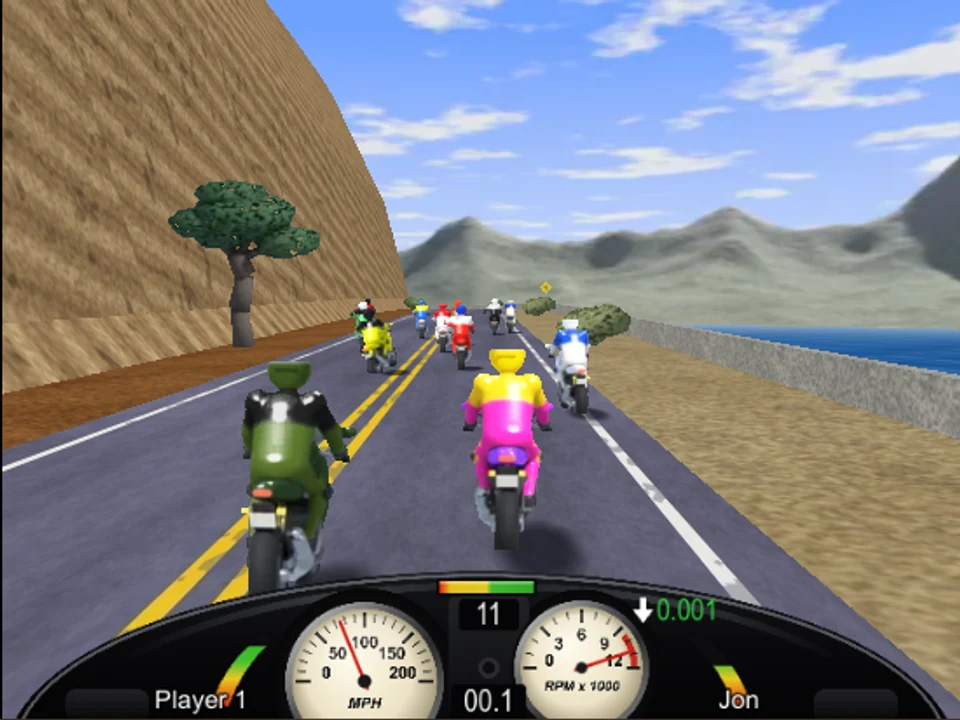
How to play Lane Roar
- Choose Endless, Missions or Daily in the garage. Pick any bike and a start time for Endless. Missions set their own light and, for some, their weather. Daily uses the Tourer 650 at dusk so every attempt rides the same conditions.
- Press Ride now and hold throttle. On a keyboard, use Up or W to accelerate, Down or S to brake, and Left / Right or A / D to lean and steer. With manual gears, E shifts up and Q shifts down. Touch players can enable auto throttle and hold the large steering and brake controls; touch play uses the automatic gearbox.
- Look beyond the closest vehicle and choose an exit before overtaking. Amber indicators flash for two seconds before a lane change, and red brake lights mean the car ahead is slowing. Traffic changes stay on their own side of the centre line.
- Above 100 km/h, clear the side of a vehicle by no more than 0.65 metres for a close pass worth 100 points, or by no more than 0.30 metres for a razor pass worth 200. Oncoming traffic is worth one and a half times as much and lorries and buses a quarter more. Each vehicle scores once. To build a combo up to four times, change line between passes, moving at least 1.2 metres across the road, with no more than four seconds between them. Passes from the same line are worth half as much each time. A light side contact is a scrape that costs speed and your combo, and rolling into the back of a car at almost its speed is a bump that does the same; a real hit ends the ride.
- Hold Y or Space, or the touch wheelie button, with throttle above 50 km/h. The front wheel rises quickly and then creeps past the balance point. Release briefly to hold it in the balance band for the best wheelie score, or tap the brake to bring it down before it comes over the top.
- When it rains, brake earlier and in a straight line: the ABS lamp lights when you ask for more grip than the road has. Inside tunnels the rain stops and the road is dry. After a ride, compare distance, close and razor passes, best combo, top speed, slipstream and wheelie time, then ride again, take the next mission or return to the garage.
Make your move
On your computer
- Up / W: throttle. Down / S: brake. Left / A and Right / D: lean and steer.
- Hold Y or Space with throttle above 50 km/h: wheelie. E / Q: shift up / down with manual gears. H: horn.
- P or Escape pauses. Tab opens the pause menu during riding; Tab and Enter operate setup controls.
On your phone or tablet
- Hold the left or right steering zone. Hold Brake to slow down; hold Throttle or enable auto throttle in the garage.
- Hold Wheelie with throttle above 50 km/h and release to balance it. Multiple fingers can steer, accelerate and balance together.
- Tap Pause to stop the ride. Portrait and landscape layouts are available, with more road visible in landscape.
About Lane Roar
Lane Roar is a free first-person motorbike game about reading gaps in moving traffic. You ride a four-lane road with traffic coming toward you on the left and travelling your way on the right. The view sits low in the saddle: gloved hands on the grips, levers, switchgear and a working instrument cluster with revs, gear, clock and warning lamps, and mirrors that show the traffic behind you on capable devices. Steering is continuous. Pressing left or right banks the bike into the move and it tracks across the road; let go and it banks the other way to settle on its new line, the way a real motorbike stops a lane change. There are no fixed lane jumps, so your speed and your line decide whether a narrow opening becomes a clean pass or the end of the ride.
The road does not stay the same. Each ride starts on a city boulevard and soon joins a ring highway, enters a tunnel lit by sodium lamps and then heads for the coast or the desert. Coast roads run beside the sea with palms, cliffs and a lighthouse; desert runs cross open sand past mesas and telegraph poles. Bridges carry you over open water and expose you to crosswind. Concrete overpasses cross the ring highway. Weather fronts arrive within the first minute: rain darkens and soaks the asphalt, mirrors the buildings and lamps in the wet road, throws spray from passing traffic and lengthens braking; fog closes the distance you can see. The clock runs at an hour every twenty seconds, so a dusk ride turns to night: windows and shopfronts light up, your low beam picks out the road studs and oncoming headlights throw their own beams. Traffic thickens and thins in waves along the route.
Choose one of three original bikes in the garage. The Commuter 125 is a single cylinder with five gears, light steering and a 118 km/h top speed. The Tourer 650 is a twin with six gears, strong low-down pull, a steady line and strong brakes, reaching 172 km/h. The Sport 900 is an inline four with a quick-shifter and a hard rush near its redline, reaching 218 km/h. The automatic gearbox shifts where the next gear pulls harder; keyboard riders can switch to manual gears, hit the shift lights for a perfect-shift bonus and use low gears for engine braking. Closing the throttle brings engine braking, stronger in a low gear. The brake squeezes on over a fraction of a second, dives the nose and sheds speed fast, but only as far as grip and lean allow; on the Sport the rear wheel goes light at the hardest stops.
Traffic behaves like traffic. Every vehicle drifts a little within its lane. Cars signal for two seconds before changing lanes, light their brake lamps when they slow, sometimes brake hard ahead of you and slow in a chain behind each other. Some cars in the inner lanes signal toward the centre line and edge over it, so splitting lanes is never a guaranteed safe line: the indicator comes on more than three seconds before you reach the car, and the far side of the gap is always left open. City buses and articulated lorries keep to the outer lanes, narrow the gap beside them and push air: expect a shove at the nose and a pull alongside. Tuck in behind traffic to ride its slipstream. Endless mode lets you ride until you crash. Twenty missions set shorter goals, some in fixed rain, fog or clear skies, and the daily route fixes the bike, conditions and traffic for ninety seconds and keeps your best attempt as a mint ghost stored only in this browser.
A ride that keeps changing
Every run leaves the city boulevard for the ring highway, then the coast road or the desert, through tunnels and over cable-stayed bridges. Weather fronts bring rain or fog inside the first minute, and the clock keeps moving, so dusk turns to night while you ride.
Real engines, real handling
The Commuter single, Tourer twin and Sport four each have their own gears, torque curve, cockpit, instruments and synthesized engine note. The bike banks into a lane change and out of it, grip limits how hard you can swerve while braking or in the rain, the fork dives when you brake and the suspension thumps over bridge joints and patched tarmac.
Risk you can measure
A live gauge shows your clearance to the vehicle beside you. Close and razor passes chain into a combo up to four times when you keep changing line, the gaps between lanes move as traffic drifts and cuts in, and a crash throws rider and bike down the road instead of cutting to a menu.
A little help for your next high score
- Begin with the Commuter and short steering taps. The bike banks in, tracks across and banks out again, so let go a moment before you reach your line.
- Watch brake lights two or three cars ahead. A car that brakes suddenly makes the cars behind it brake too.
- In rain, treat every gap as smaller. Braking while leaned over costs grip; straighten up, then brake.
- Passing a lorry pulls you toward it alongside and pushes you away at its nose. Leave room for both before going for a razor pass.
- Riding the centre line is not a safe place to sit. When an inner-lane car signals toward the middle, move to the other side of the split or into a free lane before it edges over, then weave back: the change of line also keeps your combo alive.
- Tuck in behind a lorry or bus at speed to gain slipstream, then pull out and pass with the extra speed.
- With manual gears, shift when the shift lights turn amber. On a no-brake mission, shift down instead of braking to slow with the engine.
Good questions
Is Lane Roar free to play?
Yes. All three bikes, twenty missions, the start-time choices and the daily route are free in the browser. There are no paid upgrades, advertisements to continue or accounts to create.
Do the weather and time of day change during a ride?
Yes. Weather fronts bring rain or fog within the first minute of most rides, and the clock moves an hour every twenty seconds, so day turns to dusk and dusk to night. Rain makes the road wet and braking longer; tunnels are dry. Some missions fix their weather, and the daily route repeats the same conditions for everyone on that date.
How are close passes scored?
Above 100 km/h, clearing a vehicle by more than zero and at most 0.65 metres scores 100 points; at most 0.30 metres is a razor pass worth 200. Oncoming traffic multiplies the score by 1.5 and lorries and buses by 1.25. Each vehicle scores once. A combo up to ×4 builds only when you change line, at least 1.2 metres across the road, between passes no more than four seconds apart; passes from the same line halve in value each time. The displayed clearance is the space between the edges of the bike and the vehicle.
Do the bikes handle differently?
Yes. The Commuter, Tourer and Sport have different gearboxes, torque curves, top speeds (118, 172 and 218 km/h), braking strength, grip, roll speed and steering response. Each has its own cockpit and instruments, from the Commuter’s analog speedometer to the Sport’s colour display, and its own synthesized engine sound.
What happens when I hold a wheelie?
With throttle held above 50 km/h, the front wheel lifts quickly and then creeps past its balance point. Feathering the control keeps it balanced and earns the most points; holding on too long brings the bike over backwards and ends the ride. The brake drops the front at once.
Is the daily ghost another player, and does progress save?
The mint trace is a replay of your own best daily ride saved in this browser; it cannot collide with anything. Credits, records, settings, completed missions and the daily ghost save locally when browser storage is available and do not sync between devices.